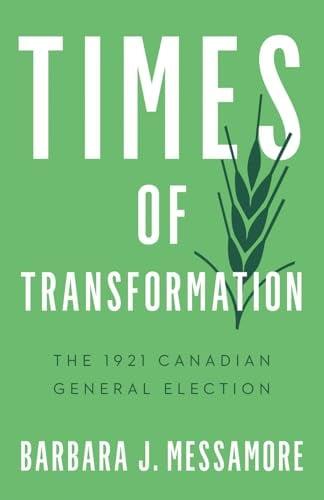
Times of Transformation: The 1921 Canadian General Election (Turning Point Elections)
Product Type: Bargain Books
Price:
List price: $20.49
Available: 1
Quantity:
copies bought in the last week
About
Studies the significance of the 1921 Canadian election, the first after World War I.
Times of Transformation positions the watershed 1921 Canadian federal election in the context of activist efforts and the revolutionary mood in the years following the Great War. New Liberal leader William Lyon Mackenzie King, who went on to become Canada’s longest-serving prime minister, came to power, with his party capturing every Quebec seat. This election brought many Canadian firsts: women were eligible to vote for the first time; it was the first minority government; and it was the first effective fracturing of the two-party system, with the establishment of a federal Labour party and the dramatic rise of the Progressives.
These changes had been brewing before the end of the war. The Progressive Party owed its success to the increased politicization of farmers and the concerns of the Western voting base. Suffrage came after a decades-long battle for political rights for women. Labor strikes swept the nation in the post–Great War era and a new national Labour party gained Commons representation. In short, this election manifested long-building forces for change and the global zeitgeist of postwar disillusionment and hope.
Times of Transformation positions the watershed 1921 Canadian federal election in the context of activist efforts and the revolutionary mood in the years following the Great War. New Liberal leader William Lyon Mackenzie King, who went on to become Canada’s longest-serving prime minister, came to power, with his party capturing every Quebec seat. This election brought many Canadian firsts: women were eligible to vote for the first time; it was the first minority government; and it was the first effective fracturing of the two-party system, with the establishment of a federal Labour party and the dramatic rise of the Progressives.
These changes had been brewing before the end of the war. The Progressive Party owed its success to the increased politicization of farmers and the concerns of the Western voting base. Suffrage came after a decades-long battle for political rights for women. Labor strikes swept the nation in the post–Great War era and a new national Labour party gained Commons representation. In short, this election manifested long-building forces for change and the global zeitgeist of postwar disillusionment and hope.
Info
ISBN: 9780774870597
Published Date: April 10, 2025
Publisher: The University of British Columbia
Language: English
Page Count: 350
Size: 8.50" l x 5.50" w x 1.00" h